
Best Exercises for Bone Density and Joint Health After 40
The exercises that protect your bones and your joints —
no pounding required
By your 40s, bone density starts becoming one of those quiet background concerns ... something you read about, hear from friends, or think about if a scan ever comes up. At the same time, a lot of women start noticing their joints have opinions they didn't used to have: a knee that complains on stairs, a shoulder that's tighter than it used to be. It can feel like conflicting priorities. Build bone, but don't hurt your joints doing it.
The good news: the exercises that build bone density and the exercises that protect your joints are, for the most part, the same exercises. You just have to do them the right way.
Why Bone Density Becomes a Bigger Deal After 40
Bone is living tissue. Your body is constantly breaking it down and rebuilding it. Up until your mid-30s, rebuilding tends to win. After that, and especially through the hormonal shifts of perimenopause and menopause, breakdown can start to outpace rebuilding. That's why bone density becomes a more relevant topic for so many women in their 40s and 50s. The encouraging part: bone responds to stress. Load it appropriately and consistently, and it adapts by getting stronger — at any age.
The Exercises That Actually Build Bone
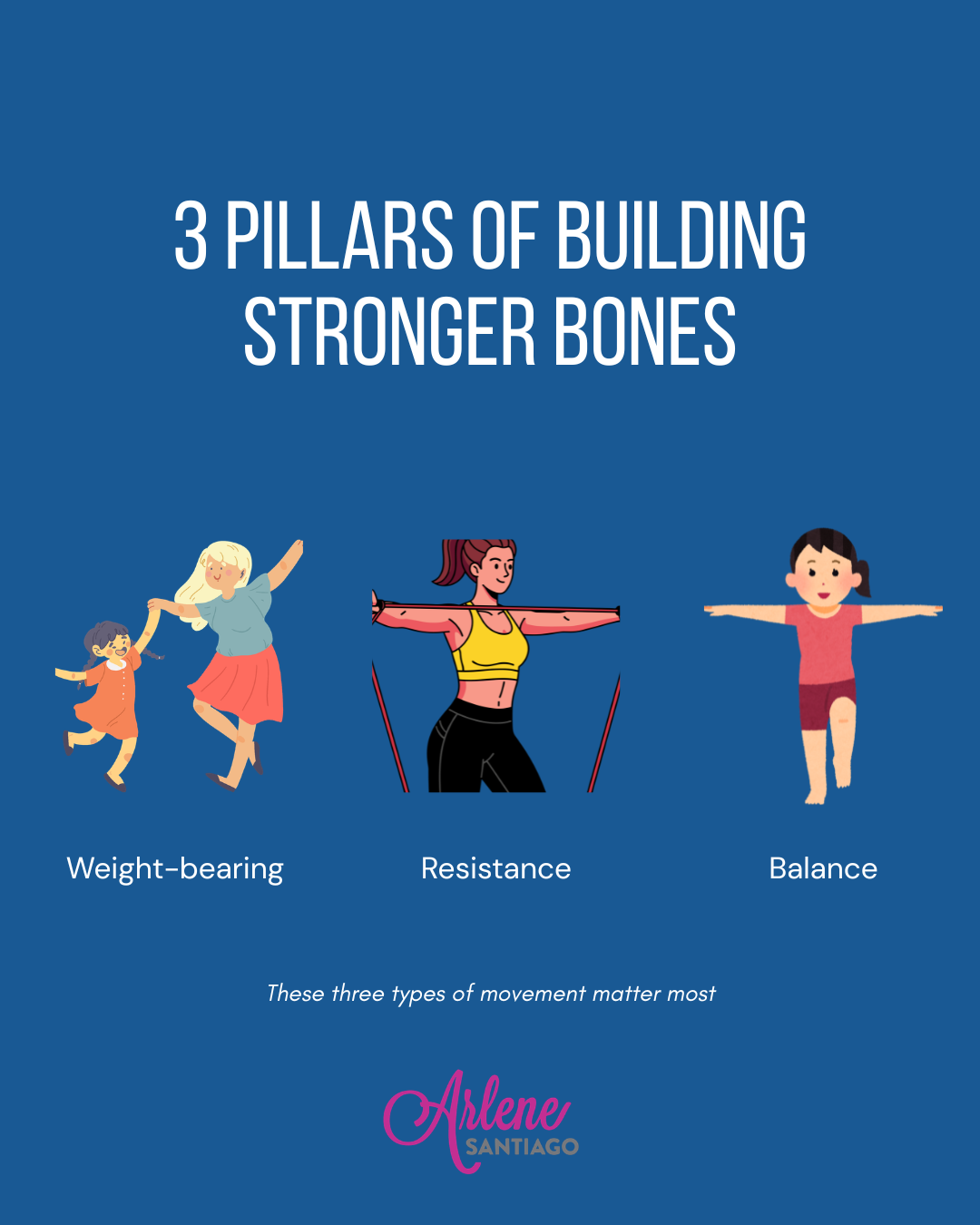
Not all movement is created equal when it comes to bone. Here's what the research consistently points to:
Weight-bearing activity. Walking, hiking, dancing, and stair climbing all count. Your body has to work against gravity, which signals bone to stay strong. Aim for most days of the week. Swimming and cycling are great for your heart, but because they're non-impact, they don't do much for bone density on their own.
Resistance training. This is the piece most women skip — and it might matter the most. Squats, lunges, rows, presses, and band work build the muscle that supports and pulls on bone, which stimulates it to strengthen. Two sessions a week is a reasonable target to start.
Balance and stability work. Bone density is only half the picture — the other half is not falling in the first place. Single-leg stands, heel-to-toe walking, and controlled weight shifts train your body to catch itself.
A note on high-impact moves like jumping and hopping: these can be effective for bone, but they're not the starting point for everyone — especially if you're managing joint pain, an old injury, or haven't strength trained consistently in a while. More on that below.
One thing worth knowing: bone adapts slowly. Give a new routine at least 3–6 months before expecting to see a difference on a bone density scan . Don't be surprised if your strength, balance, and how your joints feel improve much sooner than that.
What If You Already Have Joint Pain?
This is where a lot of generic "bone density workout" advice falls apart — it assumes you're starting from a pain-free body. If your knees ache on stairs or your shoulder has opinions about overhead movement, jumping into jump squats and heavy overhead presses isn't the answer.
This is exactly the gap I work in with clients. Building strength and bone density doesn't have to mean pushing through pain — often it means addressing why your body is guarding a joint in the first place, then loading it in a way it can actually tolerate and adapt to. A few starting points that are far easier on joints while still doing real work:
- Chair stands instead of jump squats — same muscles, no pounding
- Wall or incline push-ups instead of full push-ups, to build upper body and wrist bone strength without shoulder strain
- Step-ups on a low step instead of lunges, if knees are cranky
- Resistance bands for rows and presses — controllable load, joint-friendly resistance
A Realistic Starting Point
You don't need an hour a day or a gym membership to start. A sustainable week might look like:
- 3–5 days of walking (20–30 minutes)
- 2 days of resistance training (bodyweight, bands, or light weights — squats, rows, presses)
- Balance drills worked in a few times a week (even 5 minutes while you wait for coffee to brew)
Consistency beats intensity here. The goal isn't a punishing workout. It's giving your bones and joints a reason to get stronger, week after week.
The Bottom Line
Your body isn't done getting stronger at 40, 50, or beyond. But it does need a smarter approach than the workouts that worked at 25. If you're navigating joint pain, an old injury, or you're just not sure where to start safely, that's exactly what a personalized plan is for.
What Twice-a-Week Actually Gets You
You don't need to live at the gym to feel the difference. Showing up consistently twice a week is genuinely enough to start changing how your body handles daily life:
- Carrying groceries in one trip instead of two
- Getting up off the floor without using your hands to push off
- Climbing a flight of stairs without your knees weighing in
- Sleeping deeper and waking up less stiff
- Fewer of those unsteady, "catch yourself" moments on uneven ground
- More energy left over at the end of the day instead of running on empty
And it compounds. Your bones, joints, and muscles keep adapting for as long as you keep showing up — this isn't a plan with a finish line.
Join Me for Strength & Mobility 4 Life
This is exactly what Strength & Mobility 4 Life is built around: strength, flexibility, balance, and endurance, live on Zoom, twice a week. Two sessions a week is the pace the class is designed for — you're never behind starting there.
But you're not capped at two. Every class is recorded, so if you want to move more, you can. You can work through replays on days you want an extra session, catch a class you had to miss, or build up to three or four days a week at your own pace. You get all the benefit of consistent coaching with the flexibility to fit it into your actual life.
Strength & Mobility 4 Life begins Tuesday, September 1 — live on Zoom. Reserve your spot here and start building the kind of strength that shows up where it matters: your everyday life.
Live your life — don't let life run you.
This article is for general educational purposes and isn't a substitute for personalized medical advice. I am not a licensed medical provider. Exercise carries inherent risk of injury — always consult your physician before starting a new exercise program, especially if you have a diagnosed condition, are pregnant, or have been inactive. By following recommendations in this article, you assume full responsibility for your own health and safety.
Sources referenced:
- Fit&Well: Best exercises to build stronger bones and protect against osteoporosis
- Women's Health Network: Bone-strengthening exercises
- Harvard Health: Among women, bone mass begins to decline after age 40