
Fall Prevention Isn't Just for Seniors: Why Balance Training Matters Now, Not Later
Why Balance Training Matters Now, Not Later
Every September, National Falls Prevention Awareness Week (this year it's September 21–25) fills your feed with tips on preventing falls in older adults. If you're in your 40s or 50s, it's easy to scroll right past it. That's a "someday" topic, not a "right now" one.
Here's the thing ... balance isn't something that suddenly shows up on your radar at 65. It's a skill you're either maintaining or quietly losing for decades before that — and the earlier you start paying attention to it, the more control you have over which direction it goes.
(If you're local, a chiropractor and myself are talking through exactly this in-person on September 14 — details below.)
The statistics behind Falls Prevention Awareness Week are sobering: more than 1 in 4 older adults falls each year, about 37% of those falls cause an injury serious enough to need medical attention or limit daily activity for at least a day, and falls send roughly 3 million older adults to the ER annually. Fall once, and you're twice as likely to fall again.
Those numbers are specific to adults 65 and up, but the risk factors behind them aren't things that appear overnight at 65. Lower body weakness, balance difficulty, and slower reaction time are the product of years of gradual change: muscle mass beginning to decline as early as your 30s, proprioception (your body's sense of where it is in space) becoming less precise, and connective tissue changing through perimenopause and menopause. None of that waits for a 65th birthday.
Balance, like bone density and muscle, responds to training. It's not something you either have or don't. It's something you build or let erode, one decade at a time.
What This Actually Looks Like in Your 40s and 50s
It's not likely you are handing you a walker at 45. This shows up in smaller, easier-to-dismiss moments:
- Missing a step and catching the railing instead of your foot
- Stepping off a curb and feeling your ankle roll a little more than it should
- Reaching for something on a high shelf and needing to steady yourself
- Standing on one leg to put on pants or shoes and needing a wall for support
- Stumbling on uneven ground — a hiking trail, a gravel driveway — where you used to walk without thinking
Individually, none of these feel like a big deal. But they're your body telling you the same thing the falls statistics are: balance is a use-it-or-lose-it system, and it's easier to keep than it is to rebuild.
The Exercises That Actually Build Balance
The good news is that balance training doesn't require special equipment or a lot of time. According to the National Council on Aging and Johns Hopkins Medicine, the most effective fall-prevention programs combine two things: leg strength and balance-specific practice.
For strength:
-Sit-to-stands from a chair — builds the exact strength you use to get up off the couch or a low seat without using your hands
- Standing heel raises — strengthens calves and ankles, which do a lot of the quiet, moment-to-moment balancing you don't notice
- Step-ups or lunges — works the stabilizing muscles around your hips and knees (step-ups on a low step are a joint-friendlier place to start than a full lunge)
For balance:
- Single-leg stands — the classic test and trainer of balance. Progress it gradually: both hands on a counter, then fingertips only, then one hand, then no hands at all
- Side-stepping — trains stability in a direction most workouts ignore
- Backward walking — sounds odd, genuinely builds coordination and control
A reasonable starting point is working these in two to three times a week, five to ten reps per exercise, alongside the walking you're probably already doing. Progression matters more than intensity — the goal is to make your body work slightly harder to stay stable, not to make you unsteady.
Balance Is the Third Leg of the Stool
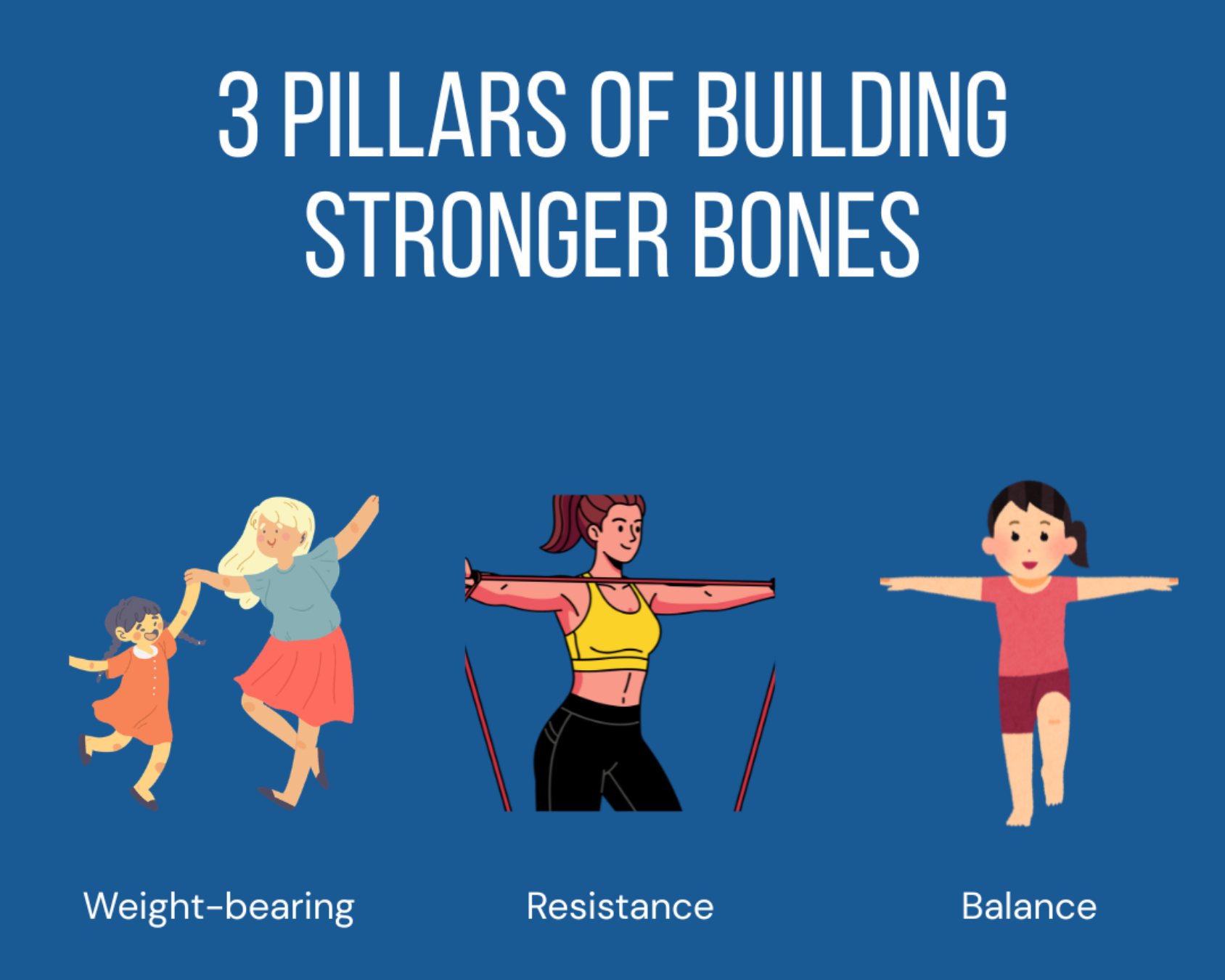
If you've been following along, this probably sounds familiar ... balance work is the piece we touched on in the bone density post as the "other half" of preventing fractures. Bone density, strength, and balance aren't three separate projects; they're three parts of the same system. Strong bones don't help much if you fall. Strong muscles don't help much if you can't catch yourself. And balance training is far more effective when it's built on a base of leg and core strength.
That's exactly why none of this works well as an isolated "do these three exercises" checklist. It works as a coordinated plan.
If You're Managing Joint Pain or an Old Injury
Balance training can feel intimidating if a knee, ankle, or hip already gives you trouble. The fear of losing your balance on a joint that already feels unstable is real. This is where working with someone who can see your specific history matters. Balance progressions can start seated, move to supported standing work, and only advance to single-leg and unstable-surface work once your joints are ready for it. The goal is never to test your limits. it's to expand them safely, at a pace your body can actually handle.
Come Talk Balance With Us — In Person, Free
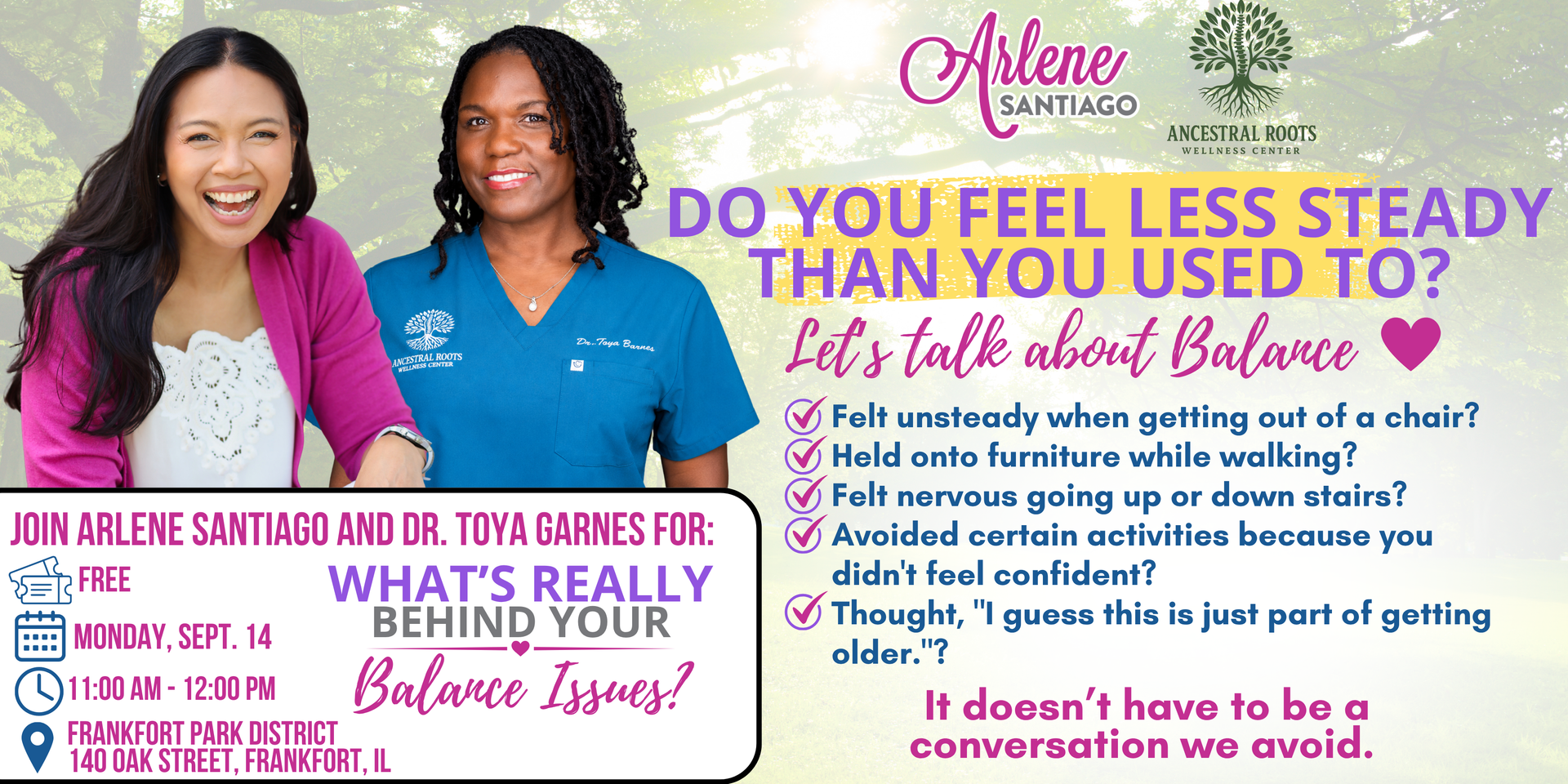
If this topic hits home, I'd love to see you at What's Really Behind Your Balance Issues? It's a free, in-person event at the Frankfort Park District on Monday, September 14, 11:00 AM–12:00 PM.
I'm teaming up with Chiropractor, Dr. Toya Garnes for a candid conversation between two practitioners who look at the body from different, and powerfully complementary, angles. We'll break down the real reasons balance shifts with age and share simple, effective strategies to help you feel more stable, secure, and confident in your body every single day.
It's the perfect companion to everything above. You'll leave with a clearer picture of
why balance changes and
what
to actually do about it. [Reserve your free spot here](https://www.arlenesantiago.com).
Falls Prevention Awareness Week is a good reminder, but the work behind it isn't a once-a-year project.
Reserve your spot here
and start building the kind of stability that has your back for decades to come.
Live your life. Don't let life run you.
This article is for general educational purposes and isn't a substitute for personalized medical advice. I am not a licensed medical provider. Exercise carries inherent risk of injury. Always consult your physician before starting a new exercise program, especially if you have a diagnosed condition, are pregnant, or have been inactive. By following recommendations in this article, you assume full responsibility for your own health and safety.
Sources referenced:
- NCOA: Falls Prevention Awareness Week
https://www.ncoa.org/professionals/health/center-for-healthy-aging/national-falls-prevention-resource-center/falls-prevention-awareness-week/
-CDC: Facts About Falls
https://www.cdc.gov/falls/data-research/facts-stats/index.html
- NCOA: What Exercises Can Help You Prevent a Fall?
https://www.ncoa.org/article/what-exercises-can-help-you-prevent-a-fall/
- Johns Hopkins Medicine: Fall Prevention — Balance and Strength Exercises
https://www.hopkinsmedicine.org/health/wellness-and-prevention/fall-prevention-exercises