
What Your Body Has Been Trying to Tell You
When Fear Lives in Your Flesh
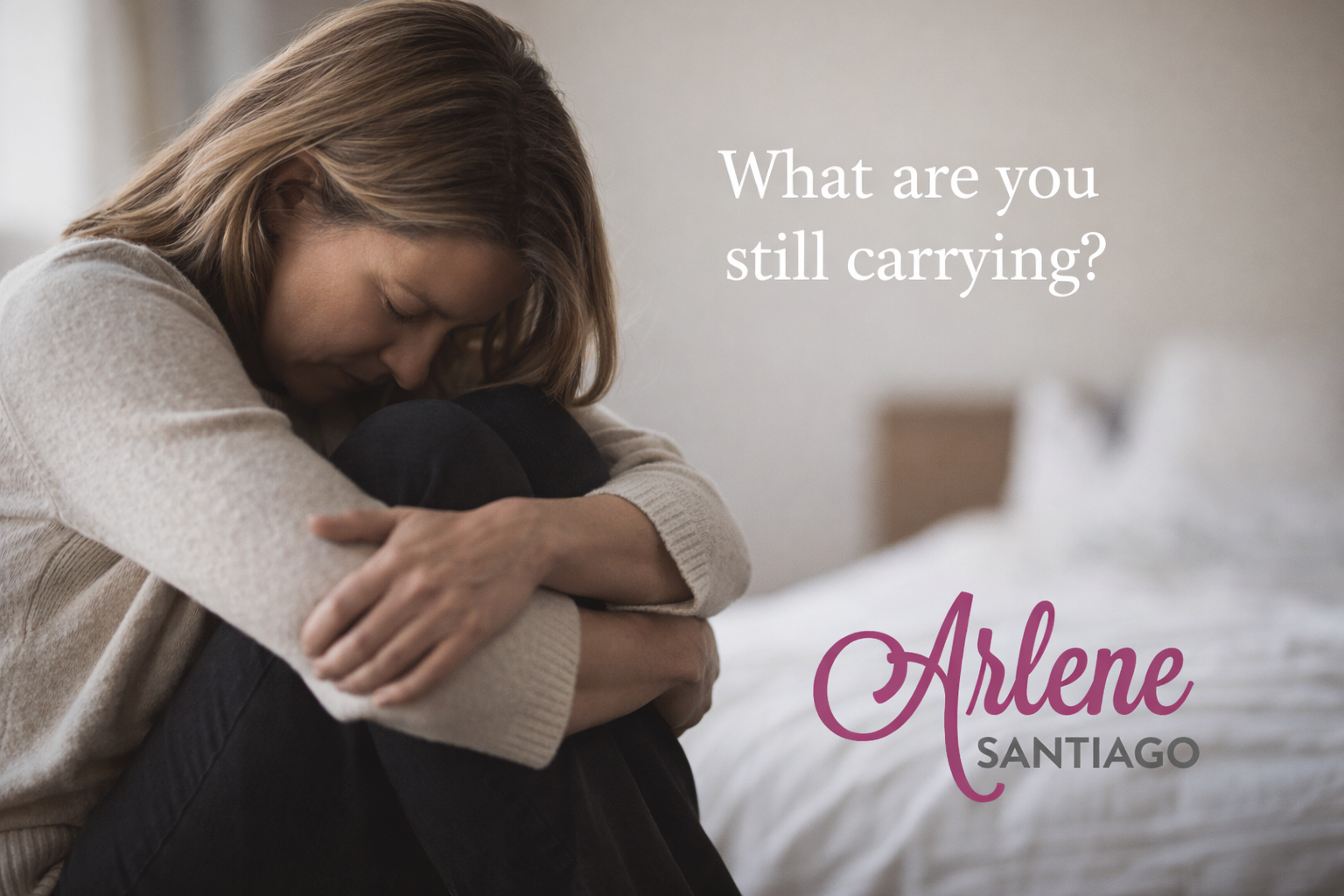
I have worked with enough bodies to know this: the body doesn’t lie.
It may not say what it’s carrying out loud. It may not announce it with words. But it shows up — in the way you brace before a step, in the tightness you can’t stretch out, in the exhaustion that sleep never quite fixes. The body is always speaking. The question is whether we’re listening.
As a functional movement and mindset expert, I’ve had the privilege of sitting with people in some of their most vulnerable moments — not just physically, but emotionally. And what I’ve seen, over and over, is that so much of what we feel in our bodies isn’t just physical. It’s the weight of what we’ve been through, what we’re afraid of, and the stories we’ve quietly told ourselves for years.
May is Mental Health Awareness Month. And I want to talk about something we don’t discuss enough: what fear — unaddressed, unnamed, and unprocessed — does to the body. Not just your thoughts. Your actual, physical body.
I want to share two stories. Names and details have been changed to protect privacy, but the experiences are real. And I have a feeling at least one of them will feel familiar.
Story One: The Woman Who Was Still Bracing
She came to me looking for help with her movement. On paper, there wasn’t anything dramatically wrong — no major injury, no diagnosis. But the moment she started to move, I saw it.
Her whole body was braced. She shuffled when she walked. She made herself smaller — shoulders forward, head down, steps short and cautious — as if she were moving through a world that might hurt her at any moment.
As we worked together, her story slowly emerged. She had lived in fear. Not fear of falling — fear of a person. Fear that had once been entirely justified. Her body had learned, at a very deep level, to stay small, to stay guarded, to stay ready.
The danger had long since passed. But her nervous system didn’t know that. Every night, the dreams still came. Every day, her body carried a threat that no longer existed — except in the cellular memory of her muscles and her breath.
Her body wasn’t broken. It had been brilliantly protective. But that protection, held too long without release, had become its own kind of prison.
Her body was still bracing for a danger that was gone. Nobody had told it that she was finally safe.
Story Two: The Woman Who Stopped Reaching
The second woman came to me differently. No dramatic backstory on the surface. Just a quiet sense that her body had been letting her down for a while. She was tired. Stiff. Disconnected from herself in a way she couldn’t quite name.
As we talked, what came out wasn’t a story about her body at all. It was a story about a feeling she’d carried for as long as she could remember: the feeling that she was never quite enough. Not enough for her family. Not enough for the people she loved. Not worthy of taking up space, asking for help, or investing in herself. So she’d stopped reaching for things she wanted. For support. For her own well-being. She had quietly made herself smaller — not in the way her body moved, but in the way she moved through her own life.
And the body, as it always does, reflected it back. The stiffness wasn’t just physical. The disconnection wasn’t random. Her body was expressing, with perfect accuracy, the emotional weight she had never given herself permission to put down.
Fear of not being enough had slowly shrunk her world — and her body had followed.
Different Fears. Same Body Response.
Two different women. Two different stories. Two different flavors of fear. And yet their bodies told remarkably similar stories: guarded, contracted, disconnected, and exhausted.
This is what unprocessed emotion does to the physical body. Fear doesn’t just live in your mind — it lives in your muscles, your breath, your posture, your movement patterns. Over time, it changes the way you inhabit yourself.
This isn’t weakness. This is what it means to be a human being who has been through hard things. The body holds what the heart hasn’t had the space to process. And here’s what I want you to hear: what we think about, we move toward — for better or for worse. The fear we carry becomes the lens through which our body sees the world. But it doesn’t have to stay that way.
You Can Put It Down
When I work with someone through my Pain Reframe Method, we start with one simple but powerful step: we get curious about what’s really there. Not to dwell on it. Not to relive it. But to finally name it — because what we can name, we can begin to release.
We work through five steps together: Reveal what’s really underneath the pain. Release the emotional weight the body has been holding. Restore natural, fluid movement. Reframe the limiting beliefs that have been quietly running the show. And finally — Reclaim your strength, your confidence, and your life.
Both of the women I described above did this work. And both of them, in their own time and their own way, began to soften. To breathe more fully. To move with more ease. Not because the past disappeared — but because their bodies finally had permission to stop carrying it alone.
Healing isn’t about becoming fearless. It’s about not letting fear be the one in the driver’s seat.
Does Any of This Sound Familiar?
If you read either of those stories and felt a quiet recognition — if some part of you thought, “That’s me” — I want you to know: you are not alone, and you are not broken.
You may have been carrying something heavy for a very long time. And you deserve support in putting it down. I’d love to have a conversation with you. Not a sales pitch — just a real, human conversation about what’s going on in your body and your life, and whether working together might help.
Your free consultation is waiting. All you have to do is reach out. Book Your Free Consultation: arlenesantiago.com/free-fitness-consultation
Movement Without Limits starts here.
— Arlene