Why "No Pain, No Gain is Outdated"
For the woman over 50 who has been told she has to suffer to get stronger; this one's for you
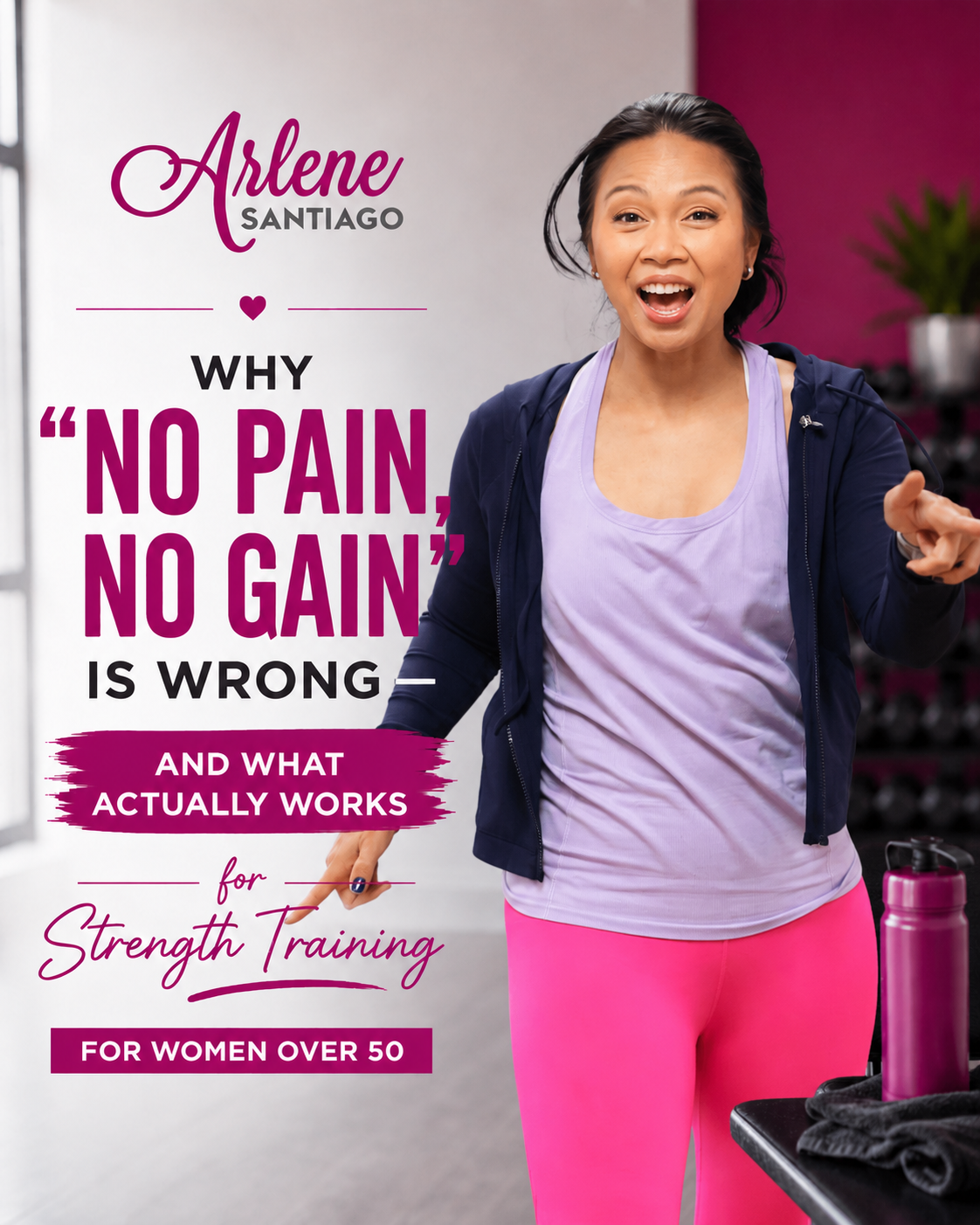
We've all heard it. Pushed through a workout that left us limping for days and convinced ourselves that meant it was working. Felt guilty for stopping when something didn't feel right. Compared ourselves to someone half our age doing twice the reps and wondered why we couldn't keep up.
The "no pain, no gain" mindset has been around for decades. Honestly, it has done a lot of damage. Especially for women over 50 who are already navigating chronic pain, limited mobility, and bodies that have changed in ways that demand a little more respect.
Here's the truth: pushing through pain is not the path to getting stronger. It's the path to getting hurt.
Where This Belief Came From and Why It Doesn't Apply to You
The "no pain, no gain" mentality was built around a very specific kind of athlete ... young, performance-driven, and training for competition. It was never designed for women in their 50s, 60s, or 70s who are working toward something far more meaningful: being able to move freely, live independently, and do the things they love without their body holding them back.
When I work with older adults, many of them are already dealing with some level of chronic pain or limited mobility. The last thing I want to do is hand someone a weight that's too heavy in week one and make things worse. That goes against everything I believe about movement.
And yet, I still see it — clients who resist modifications because they think doing the "easier" version means they're not really working. Women who feel like they have to do exactly what someone else is doing to get results. The belief that if it doesn't hurt, it must not be working.
That belief is not serving you. Let's replace it.
The Truth About How Your Body Gets Stronger
Here's what actually happens when you move with intention and build from a solid foundation: your body adapts. It gets stronger, more stable, and more capable — gradually and sustainably.
Foundational movement is where all real progress begins. Before anything gets harder, it needs to get right That means working on how you move, not just how much. It means starting where you are, not where you were at 35, and not where the person next to you is today.
Progress looks different for every woman. And that's not a limitation. That's wisdom.
5 Principles I Teach Instead of "No Pain, No Gain"
1. Meet Your Body Where It Is
There is no universal starting point for exercise for women over 50. Your body has its own history — its injuries, its patterns, its strengths. A good coach's job is to understand that and build from there, not to put you in a box that doesn't fit.
2. Build the Foundation First
Before we add difficulty, we build stability, coordination, and confidence. In functional fitness for women over 50, this isn't the slow route — this is the route. Skipping it is what leads to setbacks.
This is exactly where my
Pain Reframe Method
comes in. Many women over 50 carry pain that isn't just physical — it's emotional too. Stored tension, limiting beliefs, and the way the brain has learned to "protect" the body can all affect how you move. The Pain Reframe Method is a whole-person, 5-step process that works through five pillars:
Reveal, Release, Restore, Reframe, and Reclaim. Together, these steps uncover the true source of discomfort, clear emotional blocks, and restore natural movement patterns — so that when we do build strength, we're building on a solid, pain-free foundation. Not on top of compensations your body has been quietly making for years.
3. Know the Difference Between Discomfort and Pain
This is one of the most important things to understand in strength training for women over 50:
slight muscle soreness is okay. Not being able to move the next day is not.
When you're challenging your muscles in a healthy way, you might feel some fatigue or mild soreness afterward — that's normal. But sharp pain during movement, joint pain, or waking up the next morning unable to function? That's your body asking you to stop and listen.
4. Stop Comparing Yourself to Others
I cannot stress this enough. The woman next to you in class has a completely different body, history, and set of goals. What she's doing has nothing to do with what's right for you. Your only comparison should be to yourself ... where you were last week, last month, last year.
5. Get Stronger for Your Life
The goal isn't to look a certain way or lift a certain amount. The goal is to be able to do more of the things you love, more of the activities that bring you joy, more of the life you want to live. That is worth working toward. And it doesn't require suffering.
"But Will I Get Bulky?" Let's Talk About That
I hear this often, and I want to address it directly: strength training will not make you look masculine or bulky. That outcome requires a very specific, highly intentional training protocol and nutrition plan — it doesn't happen by accident, especially not in women over 50 whose hormone levels make that kind of muscle gain incredibly difficult.
What strength training will do is make you more capable, improve your bone density, support your joints, boost your metabolism, and help you move through the world with more ease and confidence.
That's not bulk. That's power.
The Bottom Line
Your body is not your enemy. It doesn't need to be conquered or punished. It needs to be listened to, supported, and challenged in ways that are appropriate for you.
You don't have to white-knuckle your way through every workout to earn results. You don't have to feel broken the next day to know you did something. And you absolutely don't have to keep up with anyone else.
What you do need is a foundation and the willingness to build it patiently.
That's where strength actually lives.
Ready to start moving in a way that feels good and builds real strength? I'd love to help. Visit
www.arlenesantiago.com
to learn more about working together.